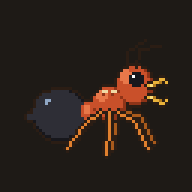
Black-headed sugar ant is a 2-star species card from the Iron Age. Black-headed sugar ants forage at night for honeydew and nectar.
Bonus by grade
| Grade | Copies needed | Bonus |
|---|---|---|
| Common | 0 | +8% Food production |
| Uncommon | 2 | +14.4% Food production |
| Rare | 5 | +24% Food production |
| Epic | 10 | +36% Food production |
| Legendary | 20 | +56% Food production |
Duplicates raise the grade: Uncommon at 2, Rare at 5, Epic at 10, Legendary at 20.
Codex
- Common: Camponotus nigriceps is a large sugar ant found across much of Australia.
- Uncommon: It has a black head, a reddish-brown middle section and a black rear end.
- Rare: It is a carpenter ant, but nests in soil as well as wood.
- Epic: It forages mostly at night.
- Legendary: It cannot sting; it bites and sprays acid instead.
Field notes are reviewed regularly. Spot something wrong? Tell us.
Field guide
| Size | Workers about 6–12 mm; queens about 16 mm |
| Colony | Often about 5,000–7,000 ants; several thousand in a nest |
| Queens | Not well known |
| Nest | Soil, often in big mounds or under stones |
| Diet | Sweet secretions, plus insects and some human food |
| Defence | No sting; strong jaws and a spray of acid |
| Active | Night; mostly resting by day |
| Lifespan | Wild queens up to about 21 years |
| Where it lives | Most Australian states, except the Northern Territory and far north of WA |
Did you know?
- Colonies sometimes move into old meat ant mounds or settle under tall eucalypts.
- The workers look sleepy by day and show sleep-like behaviour.
- They look after the caterpillars of some Ogyris butterflies.
Sources: en.wikipedia.org, brisbaneinsects.com