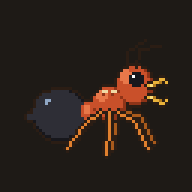
Prionomyrmex (amber) is a 4-star fossil card from the Atomic Age. Prionomyrmex is an ancient ant from Baltic amber, a cousin of Australia's dinosaur ant.
Bonus by grade
| Grade | Copies needed | Bonus |
|---|---|---|
| Common | 0 | +8% research speed |
| Uncommon | 2 | +14.4% research speed |
| Rare | 5 | +24% research speed |
| Epic | 10 | +36% research speed |
| Legendary | 20 | +56% research speed |
Duplicates raise the grade: Uncommon at 2, Rare at 5, Epic at 10, Legendary at 20.
Codex
- Common: Prionomyrmex longiceps is preserved in Baltic amber about 35–45 million years old.
- Uncommon: Its closest living relative is Nothomyrmecia macrops of South Australia.
- Rare: Baltic amber comes from forests that grew around the Baltic Sea.
- Epic: Amber is fossilised tree resin.
- Legendary: These fossils show the dinosaur ant's family once lived far beyond Australia.
Field notes are reviewed regularly. Spot something wrong? Tell us.
Field guide
| Size | Workers about 12–14 mm long (estimated from fossils) |
| Colony | Unknown |
| Queens | Unknown |
| Nest | Unknown; possibly in trees, as one early researcher suggested |
| Diet | Probably small arthropods and perhaps nectar (inferred from relatives) |
| Defence | Long jaws and a strong sting, likely used to subdue prey |
| Active | Unknown |
| Lifespan | Unknown |
| Where it lives | Europe only: Baltic, Bitterfeld and Rovno amber from the Late Eocene |
Did you know?
- Workers were large and slender, with long legs and long, narrow, curved jaws.
- Males are known from amber too, first described in 1915.
- Tiny parasitic insects called stylopids have been found on some of these fossil ants.
Sources: en.wikipedia.org, antwiki.org