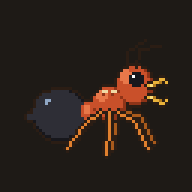
Clonal raider ant is a 4-star species card from the Information Age. Clonal raider ants have no queens: every worker lays eggs that hatch into copies of itself.
Bonus by grade
| Grade | Copies needed | Bonus |
|---|---|---|
| Common | 0 | +12% population growth |
| Uncommon | 2 | +21.6% population growth |
| Rare | 5 | +36% population growth |
| Epic | 10 | +54% population growth |
| Legendary | 20 | +84% population growth |
Duplicates raise the grade: Uncommon at 2, Rare at 5, Epic at 10, Legendary at 20.
Codex
- Common: Ooceraea biroi has no queens.
- Uncommon: Workers reproduce by cloning.
- Rare: Colonies switch between egg-laying and foraging phases.
- Epic: They raid other ants' nests for brood to eat.
- Legendary: Scientists use them to study how ants behave.
Field notes are reviewed regularly. Spot something wrong? Tell us.
Field guide
| Size | Workers about 2 mm long and stocky |
| Colony | About a hundred to several hundred workers |
| Queens | No queens; every worker can lay eggs |
| Nest | Underground, in leaf litter and soil |
| Diet | Brood (eggs, larvae and pupae) of other ant species |
| Defence | No sting; heavily armoured, blind and guided by scent |
| Active | Cycles of about two weeks of egg-laying and two weeks of raiding |
| Lifespan | Not well known; one generation takes about two months |
| Where it lives | Native to mainland Asia; now on many tropical and subtropical islands |
Did you know?
- Its genome has more scent-receptor genes than any other insect sequenced so far.
- Workers kill sisters that do not keep to the colony's egg-laying cycle.
- It is easy to keep in a lab, so it is a favourite model for studying social behaviour.
Sources: en.wikipedia.org, antwiki.org