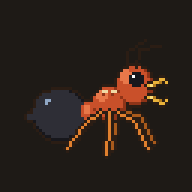
Weaver ant is a 3-star species card from the Bronze Age. Weaver ants sew leaves together with silk from their own larvae.
Bonus by grade
| Grade | Copies needed | Bonus |
|---|---|---|
| Common | 0 | +10% Materials cap |
| Uncommon | 2 | +18% Materials cap |
| Rare | 5 | +30% Materials cap |
| Epic | 10 | +45% Materials cap |
| Legendary | 20 | +70% Materials cap |
Duplicates raise the grade: Uncommon at 2, Rare at 5, Epic at 10, Legendary at 20.
Codex
- Common: Oecophylla smaragdina lives in Asia and northern Australia, where it's called the green tree ant.
- Uncommon: Workers form living chains to pull leaves together.
- Rare: Others hold larvae and squeeze out silk like a glue gun.
- Epic: One colony can hold many nests across several trees.
- Legendary: Farmers in Asia have used weaver ants to protect citrus trees for centuries.
Field notes are reviewed regularly. Spot something wrong? Tell us.
Field guide
| Size | Workers about 5–10 mm; queens about 20–25 mm |
| Colony | Can reach several hundred thousand workers spread across many trees |
| Queens | One egg-laying queen per mature colony |
| Nest | Leaf nests in trees, many per colony; never in soil |
| Diet | Small animals, plus sugary honeydew from aphids and scale insects |
| Defence | No sting; a painful bite plus irritant chemicals from the abdomen |
| Active | Most active in the wet season, December to March; slows in dry winter |
| Lifespan | Colonies last about 8 years on average; individual lifespans not well known |
| Where it lives | Tropical Asia and northern Australia, in woodland and forest |
Did you know?
- In Java, the larvae and pupae, called kroto, are sold as songbird food and fish bait.
- In autumn and winter, activity peaks around dusk.
- Some Asian countries, including Thailand and the Philippines, eat these ants.
Sources: researchonline.jcu.edu.au, ozanimals.com, ant-shack.com, en.wikipedia.org
Codex sets
- Ants of the metal ages: Leafcutter ant, Harvester ant, Weaver ant, Army ant, Trap-jaw ant, Carpenter ant, Fire ant, Banded sugar ant, Acrobat ant, Citronella ant, Silky ant, Tawny crazy ant, Blood-red ant, Inchman, Golden-tailed spiny ant, Black-headed sugar ant, Rock ant
Queen affinity
- Black garden ant: ×1 chance
- Meat ant: ×0.5 chance
- Bull ant: ×0.5 chance