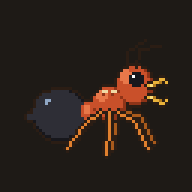
Hokkaido wood ant is a 5-star species card from the Space Age. A supercolony of this ant on Hokkaido's coast spans tens of thousands of linked nests.
Bonus by grade
| Grade | Copies needed | Bonus |
|---|---|---|
| Common | 0 | +15% population cap |
| Uncommon | 2 | +27% population cap |
| Rare | 5 | +45% population cap |
| Epic | 10 | +67.5% population cap |
| Legendary | 20 | +105% population cap |
Duplicates raise the grade: Uncommon at 2, Rare at 5, Epic at 10, Legendary at 20.
Codex
- Common: Formica yessensis is a wood ant of Japan and nearby regions.
- Uncommon: On the Ishikari coast of Hokkaido it formed an enormous supercolony.
- Rare: That supercolony has tens of thousands of nests.
- Epic: Ants from different nests treat each other as one colony.
- Legendary: It is one of the largest ant colonies ever recorded.
Field notes are reviewed regularly. Spot something wrong? Tell us.
Field guide
| Size | Workers typically about 8–10 mm |
| Colony | The Ishikari supercolony has about 45,000 nests; ordinary colonies are smaller |
| Queens | Many queens per colony; new nests bud off from old ones |
| Nest | Mounds up to about 1 m across, made of dead grass or conifer needles, in sunny spots |
| Diet | Not well known; it farms aphids for honeydew |
| Defence | Not well known |
| Active | Not well known; workers follow trails up trees, and winged ants fly in August |
| Lifespan | Not well known |
| Where it lives | Japan, Korea, north-east China and far-eastern Russia |
Did you know?
- Queens mate with several males, which keeps colonies genetically varied.
- It tends the oak aphid Tuberculatus quercicola and shares food with it.
- It was only recognised as its own species in 1976.
Sources: antwiki.org, en.wikipedia.org