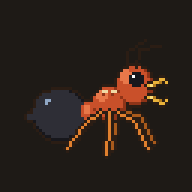
Honeypot ant is a 3-star species card from the Stone Age. Some honeypot workers become living food stores, called repletes.
Bonus by grade
| Grade | Copies needed | Bonus |
|---|---|---|
| Common | 0 | +10% Food cap |
| Uncommon | 2 | +18% Food cap |
| Rare | 5 | +30% Food cap |
| Epic | 10 | +45% Food cap |
| Legendary | 20 | +70% Food cap |
Duplicates raise the grade: Uncommon at 2, Rare at 5, Epic at 10, Legendary at 20.
Codex
- Common: Repletes are fed until their abdomens swell like grapes.
- Uncommon: They hang from the ceiling of the nest and share food in dry times.
- Rare: The Australian honeypot ant is Camponotus inflatus.
- Epic: Aboriginal Australians have long dug up honeypot ants as a sweet food.
- Legendary: The honey is stored in the crop, the social stomach.
Field notes are reviewed regularly. Spot something wrong? Tell us.
Field guide
| Size | Biggest repletes about 15 mm long and 1.4 g |
| Colony | Two studied nests held about 1,000 and 4,000 ants |
| Queens | Can have several; one studied nest had six |
| Nest | Deep underground; one studied nest reached 1.7 m under a mulga tree |
| Diet | Mulga nectar, plus meat scavenged from dead animals such as lizards |
| Defence | Not well known |
| Active | Workers forage by day |
| Lifespan | Not well known |
| Where it lives | Arid inland Australia, including the Northern Territory and Western Australia |
Did you know?
- Nearly half the ants in the studied nests were repletes.
- The honey comes from a mix of plant and animal foods, not just nectar.
- Nest tunnels spread about 2.4 m sideways from the entrance.
Sources: en.wikipedia.org, assets.atlasobscura.com
Codex sets
- First ants: Founding Queen, Funnel ant, Black garden ant, Meat ant, Coastal brown ant, Honeypot ant, Green-head ant, Jack jumper ant, Yellow meadow ant, Little black ant, Thief ant
Queen affinity
- Black garden ant: ×1.1 chance
- Meat ant: ×1.1 chance
- Bull ant: ×1.1 chance