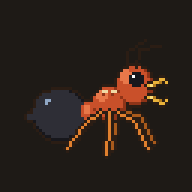
Indian jumping ant is a 4-star species card from the Industrial Age. Indian jumping ants leap after prey, and workers can become egg-layers when the queen dies.
Bonus by grade
| Grade | Copies needed | Bonus |
|---|---|---|
| Common | 0 | +12% first-strike damage |
| Uncommon | 2 | +21.6% first-strike damage |
| Rare | 5 | +36% first-strike damage |
| Epic | 10 | +54% first-strike damage |
| Legendary | 20 | +84% first-strike damage |
Duplicates raise the grade: Uncommon at 2, Rare at 5, Epic at 10, Legendary at 20.
Codex
- Common: Harpegnathos saltator lives in India.
- Uncommon: It has large eyes and long jaws.
- Rare: It can jump several centimetres to catch insects.
- Epic: If the queen dies, workers can start laying eggs.
- Legendary: These egg-laying workers are called gamergates.
Field notes are reviewed regularly. Spot something wrong? Tell us.
Field guide
| Size | Workers about 2 cm long; queens look very like workers |
| Colony | Small; one study averaged about 65 workers |
| Queens | One queen, or egg-laying workers (gamergates) after she dies |
| Nest | Ground nests with a twig-ringed entrance, closed in the evening |
| Diet | Live insects, seized on the ground or by leaping at flying prey |
| Defence | Bites and stings; leaps away when alarmed |
| Active | Day; hunts in cool mornings and afternoons, resting at midday |
| Lifespan | Queens up to about 5 years; gamergates about 3; workers about a year |
| Where it lives | India, especially the south-west (Malabar and Mysore) |
Did you know?
- Jumps can reach about 10 cm forward and 2 cm high.
- Gamergate succession can keep a colony going far longer than any one queen.
- They do not lay scent trails, so each worker hunts alone.
Sources: ant-shack.com, npr.org, en.wikipedia.org, entomology.umd.edu, link.springer.com